17 January 2016

Dreaming the Dream Forward

John 2:1-11

2nd Sunday after Epiphany

17th January 2016

Well, that was quite a wedding, wasn’t it? Don’t you wish you were on that guest list? Wouldn’t you have loved to be on the guest list?  It was quite the party.  Everyone was there.  The disciples were there and Jesus and his mother, who bossed Jesus about. And lots of wine was consumed, so much they ran out of it, no doubt embarrassing the host.  That’s probably why Mary told Jesus, the ever-responsible one, to do something about it. 

Having wine at a wedding was a sign of generosity and hospitality.  Wine didn’t flow freely in Jesus’ time.  It was a cash crop, like olive oil.  The poor drank little wine.  They drank water with their daily diet of cheese and bread and olive oil.  Weddings were different.  The couple’s family had to save for a long time in order to have wine at a wedding reception.  Family and friends passed harsh judgments on those who couldn’t throw a wedding in style.[1]  The wine was supposed to flow freely.  So there’s shame here in Cana.  The family couldn’t afford their guests.  It was not enough.  Mary tells Jesus to do something about it and then she say to the servants, “Do whatever he tells you.”

Jesus orders the servants to take the large, stone water jars used for purification, six of them, obviously empty, and fill them with water.  They did as they were told, drew some out, and gave it to the wine steward who, unaware of the miracle, was impressed by the quality of the new wine.  The steward says to the groom, “Everyone serves the good wine first, and then the inferior wine after the guests have become drunk. But you have kept the good wine until now” (John 2:10).”  It’s a sign, John tells us, Jesus’ first sign.

Ah, but what does it signify?  That’s the question.  This “miracle” story is highly symbolic.  When we read John’s gospel we need to remember that there’s always two narratives, two levels of meaning, two stories going on at the same time.  There’s what’s happening on the surface of things and then there’s the deeper, more significant symbolic meaning.  This is “just” a wedding that runs out of wine.  I’m sure that happened all the time.  It’s an ordinary domestic scene.  And, yet, this miracle actually symbolizes something else for those with eyes to see.  This text, like most of John’s gospel, is swimming in symbolism.  A surface reading of the story misses the point—which I’ll get  to shortly.

First, I’m struck by the way today’s gospel lectionary beautifully complements the Martin Luther King, Jr. holiday this weekend.  It might seem like a stretch to suggest that Jesus’ miracle at Cana has anything to do with King’s life and witness and struggle.  But there’s a connection.  The text has something to say to the Church as we continue to dream the dream.

We know his famous “I Have a Dream” speech given on the steps of the Lincoln Memorial at the March on Washington for Jobs and Freedom in August 28, 1963.  We’ve seen photos of that event.  Seen the film footage.  You might have been there (Al Davies).  Whenever I visit the Lincoln Memorial  (my favorite monument in DC), I’m always struck by the juxtaposition of the massive statute of Lincoln, with the Gettysburg Address carved into the wall to Lincoln’s right and the Second Inaugural Address to his left, one of the most theologically profound addresses ever given by a president.  Whenever I’m there I look for the stone marker at the top of the steps that indicates the exact spot Dr. King offered his speech, with Lincoln looking over his shoulder. “I have a dream,” he said, “that one day this nation will rise up and live out the true meaning of its creed: ‘We hold these truths to be self-evident, that all men are created equal.’”[2]  One day.

Two days after the speech, the COINTELPRO, a covert program of the FBI, which at times acted beyond the law, said, “In the light of King's powerful demagogic speech yesterday he stands head and shoulders above all other Negro leaders put together when it comes to influencing great masses of Negroes. We must mark him now, if we have not done so before, as the most dangerous Negro of the future in this Nation from the standpoint of communism, the Negro and national security.”[3]

There was much suffering and pain and death in the years following that speech.  And, thank God, we have come far, very far, since the days of segregation and Jim Crow.  It was said with the election of Barack Obama as president that we entered into a post-racial America.  I didn’t believe that in 2008 and I certainly don’t believe that now.

   It’s all too painfully obvious to us, especially in light of recent events in Ferguson, New York, Charleston, Chicago, and right here in Baltimore this year, that for many African-Americans, that dream is still “a dream deferred,” to quote the poet Langston Hughes (1902-1967).  King’s “I Have a Dream” speech was actually connected to a poem by Hughes, written in 1951, called “Harlem.”  It goes like this:

                What happens to a dream deferred?
                Does it dry up/ like a raisin in the sun?
                Or fester like a sore—And then run?
                Does it stink like rotten meat?
                Or crust and sugar over—like a syrupy sweet?
               
                Maybe it just sags
                like a heavy load.

                Or does it explode?[4]

   It’s a good question.

   Maybe there’s a problem with the dream itself?  Some might say, “Well, what King offered was only a dream,” meaning it was a “fantasy,” it wasn’t realistic.  “It raised expectations that can’t be fully realized in American society.  It’s nice to be optimistic, imagine a future, but don’t get carried away.”  Some contemporary authors, such as Ta-Nehisi Coates, who grew up in West Baltimore, seems to suggest in his recent bestselling Between the World and Me, a series of letters to his son, that King’s dream, rooted in the Judaic-Christian vision of justice and redemption, along with the American dream, are both illusions, at least for African-Americans.  Struggle, he says. Stop dreaming.[5]

   Unfortunately, people don’t put a lot of stock in their dreams, in the power of dreams to transform us and change us.  Some, such as Sigmund Freud (1856-1939), think our dream life is a big trash compactor that processes all the stuff from our waking life.  Others, such as Carl Jung (1875-1961), believed that dreams are given by the psyche, maybe even by God, to compensate for the extremes of our waking life, to offer balance.  Dreams can also have a prospective dimension to them; their message originates from some place deep, often with a greater wisdom and generosity than our skittish, frightful egos.  These dreams call for action, for change, they move us forward; they lead us toward transformation and wholeness.  Jung also believed that profound dreams, “big dreams,” can be lived and relived in order to fathom their meaning and depth.[6]  Dreams can be a kind of North Star that leads us in the way we should go.  From this perspective, we need to dream the dream forward, or, better, live the dream forward.  (I’m firmly in Jung’s camp, by the way.)

   King’s dream, vision still needs to be lived forward.  We’ve made great strides.  But as they sing at the end of the musical Hairspray, “I know we've come so far, but [baby, baby] we've got so far to go.”[7] There’s still so much work that needs to be done.

Throughout King’s ministry the dream was expressed in his vision of the beloved community. King said, “Our goal is to create a beloved community and this will require a qualitative change in our souls as well as a quantitative change in our lives" (Nonviolence: The Only Road to Freedom, May 4, 1966).  His words resound with the gospel; they echo Jesus' teaching on the Kingdom of God (or Kin-dom or Realm, even Empire of God).  The beloved community is the dream—a dream that shapes our waking life.  And if we’re going to enter into that community, if we are going to live from the dream, if we’re really going to get there and are serious about wanting to get there it will only come through change: qualitative change in our individual souls, in our hearts, change in the nature of our thoughts and feelings and quantitative change in our lives, in our actions, collective action strong enough that moves us off from dead center or the way things are.  The status quo is often status woe, especially for those without power or privilege.

Why is this so difficult for us?  Why?  Why is it so difficult for us, both as a Church and as a nation, to talk honestly and openly about racism?  We all struggle with this, whether we’re black or white or neither.  Whether it’s the sin of racism in our past or the consequences of the unconfessed sin of racism that plagues our present, we need to honest about it.  Racism is sin and every institution—church, nation, corporation, family—that benefits from being racist or helps to support racism is sin, is caught in sin, is a partner in crime against the human spirit.  It’s why Jim Wallis, of the evangelical-social justice Sojourners community, calls racism America’s “original sin.”[8] Philosopher Eddie Glaude, Jr., who teaches at Princeton University just released a book this week with the title Democracy in Black:  How Race Still Enslaves the American Soul.  

Until we confess the sin of racism, both as a people and as individuals, and acknowledge our own complicity in it—no matter how difficult and painful it is to do so—and then repent, which means changing our hearts and our minds and actions, both individually and collectively, nothing will change.  Christians have to act.  Christians have to call out other Christians when they’re being racist.  Christians needs to confess their complicity in the sin of slavery.  Christian culture isn’t innocent.  We helped to cause the mess we’re in.  The first slave ship to arrive on these shores in 1564, a British vessel, was named “The Goodship Jesus.”[9] 
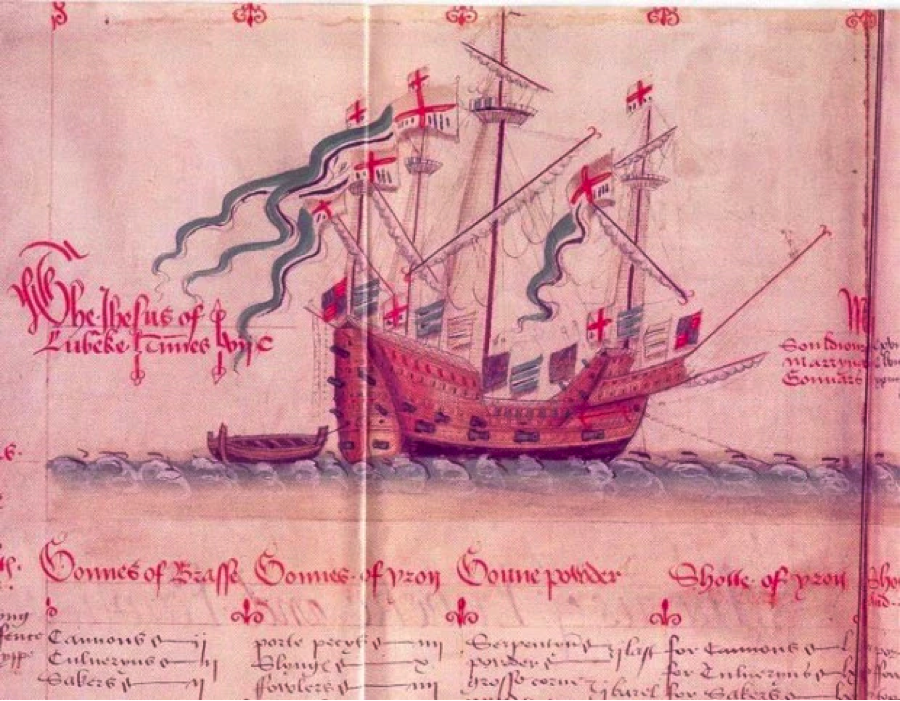

The Goodship Jesus, the first slave ship to arrive in America.
Ta-Nehisi writes to his son, “You cannot forget how much they took from us and how they transfigured our very bodies into sugar, tobacco, cotton, and gold.”[10]  History is never destiny, though. The Church must be able to embody the change and transformation that it teaches.  If the Church, of all places, can’t be a model for reconciliation, if we can’t change ourselves and bring about the change, then what are we here for? 

Why is it so difficult?  


I was recently remind of W. H. Auden’s (1907-1973) searing words:

           We would rather be ruined than changed

           We would rather die in our dread

            Than climb the cross of the moment 

            And let our illusions die.[11]

We can’t do this ourselves.  That’s why the water is changed into wine.  There is no way for the followers of Jesus to follow him and claim his name without change. Sure, the wedding guests needed wine.  So Jesus made wine.  But there’s another level of meaning in this story that says something about what matters most to Jesus and those who love him.  To trust in him means that we will undergo change and experience change until we die.  And we need to change.  We need to be transformed.  The entire Christian life is all about ongoing change and reform.  Those six, stone jars were originally made only to hold water, water for purification.  They must now be put to a different use.  “The water of one era must be replaced by the wine of another.”[12] 

Wine, itself, in this story is symbolic of the New Age, it’s the New Way that Jesus offers the world.  It’s a sign of the Messianic Age.  In the book of First Enoch, written before Jesus’ time, we’re told “in those days,” the Messianic Age, the vines will produce wine in plenitude.  Philo the Jew (25 BC – 50 AD) of Alexandria, a contemporary of Jesus, spoke of God’s presence in the world in terms of rich, red wine.  Curiously, this comes from Philo’s treatise called On Dreams.  Jesus provides wine, loads of wine–do the math–about 180 gallons of the finest wine!  This revealed his glory “and his disciples believed in him” (John 2:11).

If Jesus can do that to water, just imagine what he is doing and wants to do with us and for us—we who are mostly water.  We need to be made into new wine ourselves something needs to occur within us.  We are supposed to embody God’s New Order, God’s New Age, God’s Kingdom.

Dr. King’s dream wasn’t King’s dream.  It was and is God’s dream and we need to allow God’s dream to dream through us, to dream us forward, allow God’s dream to shape us and to change us—into new wine!


[1] Gerard Sloyan, John (Atlanta: John Knox Press, 1988), 36.
[2] Full text of his speech may be found here.
[3] Memo hosted by American Radio Works (American Public Media), "The FBI's War on King.”
[4] Langston Hughes, “Harlem,” Selected Poems of Langston Hughes (Random House, 1990)
[5] Ta-Nehesi Coates, Between the World and Me (New York: Spiegel & Grau, 2015).
[6] See C. G. Jung, “General Aspects of Dream Psychology,” The Structure and Dynamics of the Psyche, The Collected Works of C. G. Jung, Vol. 8 (Princeton:  Princeton University Press, 1981), 237ff.
[7] Hairspray, music by Marc Shaiman and lyrics by Scott Wittman, 2002.
[8] Jim Wallis, America’s Original Sin: Racism, White Privilege, and the Bridge to a New America (Brazos, 2016).
[9] Coates, 71.
[10] Cited in Howard Thurman, Jesus and the Disinherited (Boston: Beacon Press, 1976), 14.
[11] W. H. Auden, “Age of Anxiety” (1948).
[12] Sloyan, 39.

10 January 2016

The Water is Calling

Luke 3:15-17, 21-22

Baptism of the Lord

10th January 2016

Did you notice something odd about Luke’s account of Jesus’ baptism?  Perhaps we know the story so well that we miss it.  There is, though, something missing.  There’s something unique about Luke’s telling.  Here it is. Ready?  We don’t actually “see” Jesus baptized.  It’s not there!  It happened, but we don’t “see” it.

In Luke’s Gospel, we have the story of John the Baptist preaching and baptizing in the River Jordan.  Twenty verses in chapter three describe John’s ministry.  The people approach the riverbank wondering if John might be the Messiah, the anointed one, the Christ.  He says, “I baptize you with water; but one who is more powerful than I is coming; I am not worthy to untie the thong of his sandals.  He will baptize you with the Holy Spirit and fire” (Luke 3:16).

We’re missing, in Luke’s Gospel, Jesus’ arrival at the river asking to be baptized, we’re missing John’s initial refusal to baptize Jesus.  We’re missing Jesus going down into the water.  We’re missing Jesus coming up out of the water as a dove descends upon him and the heavens declare his identity.  We never “see” Jesus’ baptism.

Instead, Luke writes, “Now when all the people were baptized, and when Jesus also had been baptized and was praying, the heaven was opened, and the Holy Spirit descended upon him in bodily form like a dove. And a voice came from heaven, “You are my Son, the Beloved, with you I am well pleased” (Luke 3:21-22).

What do we make of all of this?  How does it shape our understanding of Jesus’ baptism? Does it impact the way we view our own baptism?  All of this seems relevant on this Sunday as we remember Jesus’s baptism and consider our own, as we receive new members into the ministry of this church, and witness the sacrament of baptism, not for an infant, but for an adult.

Roman Catholic theologian Hans Urs von Balthasar (1905-1988) is correct when he says, “The Church does not dispense the sacrament of baptism in order to acquire for herself an increase in membership but in order to consecrate a human being to God and to communicate to that person the divine gift of birth from God.”[1]  Both Protestants and Catholics alike need to remember this. 


We lessen the meaning of the sacrament when we think of it only in terms of membership into the church, whether it’s the baptism of an infant or an adult.  We also lesson the meaning of baptism when we think it’s only about being engrafted into Christ’s family tree, welcomed as a member of God’s household, the Church.  Yes, all of this is true.  These views form part of what baptism has come to mean in the Church, all for good reasons.  However, baptism meant something very different both for Jesus and for the first Christians. 

Baptism was originally an act of initiation, initiation into the life and work of God.  It was a ritual of consecration, in which one was identified and affirmed as a child of God and then set apart for God.  It was an act of preparation, which paves the way for something else to happen, for what comes next, which was, in many respects, the whole point. Baptism prepares you to claim your identity as God’s beloved, and then to discover why you were born in the first place, to discover the reasons for your existence, to fathom the depths and desires of your soul, and then to serve God with all your soul—and heart, and mind, and strength (Luke 10:27).
               
Poet Mary Oliver once asked, “Tell me, what is it you plan to do with your one wild and precious life?”[2]  Why is it so important to recognize the “divine gift of [your] birth”? Why were you born? Why are you here? What is being asked of you in the time you have? Baptism is, in many ways, an ancient-yet-modern rite that helps us answer these questions.  And it’s this aspect of baptism that has even greater meaning for us as adults.
               
What’s so striking about Luke’s account is that, yes, we have water (and that’s important) and the act of baptism itself (which is also important), but he seems to be placing greater emphasis upon what happens after baptism. Because it’s only after he’s baptized—note, as Jesus was praying—that the heaven was opened to him.  It’s only after his baptism that the Holy Spirit then descends on him “in bodily form.”  And it’s only after his baptism, not during it, that he hears the voice from heaven say, “You are my Son, the Beloved, with you I am well pleased.”

All of which leaves us with the impression that baptism is an act of preparation, a ritual and practice that helps us to claim who we are in order to discover then what is expected of us.  The water calls us, invites, summons us to enter into its depths, to go down deep and enter into the flow of the water, bathe in it.  Allow the water to wash over you, cover you, bury you, allow the water to cleanse you. Its soluble waters have the power to symbolically loosen all the dirt and grime of your life, all the things from your past, all of your burdens and regrets and sins that need to be washed away.  

Baptism is a kind of death, where we put to death or remove the things in our lives that devitalize us, that no longer serve us well, that are no longer in service to life, are no longer life giving. They’re washed away.
               
But we don’t stop there, in the washing.  The washing clean, the dying to former ways is done in service to what comes next, to the rising up to new life, to resurrection-life, ready for what comes next.  Having been bathed, cleansed, and refreshed in the water, we’re now ready to pray and in our prayer be attentive to the movement of the Holy Spirit.  Attentive in prayer we become open—isn’t that what prayer is, being open?  When we’re open we’re ready, finally, to hear what our baptism has prepared us for all along, open and ready to hear and fully fathom what we couldn’t hear or understand or know before we were baptized.  And what we discover is what Jesus discovered, that we, too, are the Beloved of God. 


You are a child of God.  That’s who you really are, at the heart of your being.  This is what we discover here after moving through the waters.  In many respects, it’s easier for us to say these things to infants and to children when they’re baptized, to assure them that they are, right from the start, beautiful children of God, which they are.  What about us?  As we grow up and gather the dust and dirt of our lives sometimes it’s tough for us to know or remember that we, too, are God’s children.  Sometimes the poor choices we’ve made along the way as adults, the mistakes and hurts and wrongs and regrets cause us to question our identity and place in God’s family. These waters remind us who we are.  This is why it’s important for us to claim the meaning of our baptism—as adults.

But we can’t stop there.  Yes, the waters help us to hear the voice: You are God’s Beloved.  However, this is merely the starting point for the journey.  Now, as a child of God: live like one and love like one and give like one and serve like one.  Isn’t this what Jesus discovered at the Jordan? Wasn’t this the pattern of his life?  Didn’t this then shape his ministry? Of course.  Are we not baptized into Christ?  The same goes for all of us.  He is the pattern.  He is the way.  He is our way.

For Luke, there’s greater emphasis on what happens after baptism; baptism prepares Jesus to hear the summons and then the experience sends him into ministry.  In Luke’s telling we learn Jesus is God’s Son, so we have his divine lineage.  And then, in verse 23, Luke provides us with his genealogy that goes back to Adam.  And so we’re given his human lineage.  Knowing his divine-human identity, Jesus is then sent into the wilderness we’re told, “full of the Holy Spirit.”  After enduring his ordeal in the desert, Luke tells us, “Then Jesus, filled with the power of the Spirit, returned to Galilee” to begin his ministry in Nazareth.  Then we find Jesus reading in the synagogue there, reading from the scroll of Isaiah, reading these words: 
                “The Spirit of the Lord is upon me,
               because he has anointed me
               to bring good news to the poor.
               He has sent me to proclaim release to the captives
               and recovery of sight to the blind,
               to let the oppressed go free,
               to proclaim the year of the Lord’s favor” (Luke 4:18-19).

To be baptized is to be claimed by God.
If claimed then anointed. 
If anointed then called. 
If called then sent. 
His work is our work.
His work is your work.
This is why you were born.

____________


[1] Hans Urs von Balthasar, Unless You Become Like This Child (Ignatius Press, 1991).
[2] Mary Oliver, “The Summer Day.”

03 January 2016

Starwise

Waldmar Flaig (1892-1932), Der Stern von Bethlehem (1920)
Matthew 2:1-12

Epiphany Sunday
3rd January 2016

This is a brilliant story that we have here in Matthew’s Gospel. There’s so much going on in twelve verses.  Drama and danger.  Mystery, suspense, and intrigue.

We have a frightened, insecure despot in King Herod (d. 4BC), who was actually King of Jews, declared king by the Roman Senate (in 37 BC), who ruled at the will and pleasure of Caesar Augustus (63BC-19AD). 

We have magi or magicians or astrologers from some exotic place in the Orient. They show up from nowhere searching for a “child who has been born king of the Jews” (Matthew 2:2), which is why Herod is so scared by their arrival because he’s supposed to be King of the Jews.

We really don’t know much about the magi, who they were or where they were from.  We suspect they were from Persia.  They certainly weren’t kings.  We don’t know how many made the journey to Jerusalem.  The old carol tells of “We Three Kings of Orient Are,” but the text doesn’t say this. And we don’t know their names. What we do know is that they’re “wise."  They were priests.  They definitely weren’t Jewish. They were Gentiles.

We have an entire city set on edge by their appearance.  And we have chief priests and scribes of Israel, the religious authorities, scrambling, searching through their ancient texts to find a reference as to where the Messiah would be born.  They remember: “Bethlehem, in the land of Judea.”  Then Herod “secretly” (Mt 2:7), the text says, summons the wise men to discover the exact time the star appeared. 

And then you have Mary, with the child Jesus (probably two years of age), with no mention of Joseph.  The magi’s arrival at the home of Jesus called forth from within them worship, homage; “they knelt down,” and opened their “treasure chests” and offered him “gifts of gold, frankincense, and myrrh” (Mt. 2:11).  Then, being warned in a dream, they left by another road.  Joseph, too, had a dream and was warned to flee, to seek refuge in Egypt (Mt. 2:13-15).  When Herod discovered that these wise guys pulled a fast one on him, he was furious, and unleashed his fury on children and their families (Mt. 2:16-18). All because of the birth of a baby whose name means “God is with us.”

And there’s one other character in this story, something that moves the narrative along and it’s the star.  It’s the brilliance of a star that weaves its way through the narrative.  This is a star that moves.  It’s a star that summons them to move.  It’s a star that seems to be alive, intent on communicating with them.  This star knows something that the wise men don't.  This star is wise. 

The seventeenth century scientist and theologian Thomas Browne (1605-1682) once wrote, “Ice splits starwise.”[1]  This is where the sermon title comes from.  But I’m using this wonderful word, starwise, in a different way to talk about the wisdom of the star, a wisdom that captures the attention of people who are wise, wise enough to trust the wisdom of this star and go wherever it leads them, to destinations unknown.

Scholars and contemporary astronomers love to guess about the nature of this star.  It fascinates us.  But we don’t know what it was.  Whatever it was it was no ordinary star.  It was more like an ancient GPS system than an astronomical event.[2] It moved for a period of time.  It rose in the East and led them to Jerusalem.  Then from Jerusalem they set out for Bethlehem, about seven miles away, “and there, ahead of them, went the star” (Mt. 2:9).  And then the star “stopped” because they had arrived at the home (not a manger, but the home) of Mary and Joseph and Jesus.  And, in a sense, the magi arrived home, although they had never been there before.

For the wise men, it’s all because of a star.  But for the star they would never have left home.  They had to leave home in order to discover what the star knew.  And as they came to know, the brilliance of that star among stars mirrors and reflects the brilliance of God’s glory that was born in Bethlehem.  Jesus’ appearance, the fullest manifestation of God’s glory and light in this child, is an epiphany—a manifestation of God’s glory, a light for the entire world to see, not only for backwater Bethlehem, but also for all the nations of the world.  Gentiles, meaning the nations, will see in Jesus the glory of God.
_________________

In a remarkable section of Paul’s second letter to the Corinthians we have these words, which describe the meaning of Jesus’ birth.  They’re written by someone who never read Matthew’s Gospel or Mark’s or Luke’s or John’s, who knew nothing of magi or shepherds or mangers, yet could write: “For it is the God who said, ‘Let light shine out of darkness,’ who has shone in our hearts to give the light of the knowledge of the glory of God in the face of Jesus Christ” (2 Cor. 4:6).

It is no wonder that when the magi saw “that the star had stopped, they were overwhelmed with joy” (Mt 2:10).  Overwhelmed with joy.  Joy overwhelms them. Joy knocks them off their feet.  Joy causes them to kneel. The star did not fail them.

On this Sunday we celebrate the birth of Jesus, the birth of light, light that is all the more brilliant when it shines in darkness.  The brilliance of the star is best revealed at night.  The magi, seemingly, arrive at their destination at night. 

The magi trust the wisdom of the star and are willing to go where it leads, leading them through the night, through the darkness.  They place their trust in nature and the movement of the stars, this cosmos, to guide them. They assume that the cosmos, the universe, that God is on their side, working with them and for them.  They have enormous trust, going off on this hard journey to a foreign land to find a baby.  They have trust in Divine Providence leading the way.  They must have second-guessed themselves countless times, thought themselves foolish, not wise, and yet they ventured forth into the unknown.  They went. 

Something of the same is asked of us.  Trusting the providential care of God, we too are summoned forth on the journey of our lives, to follow the star that leads to the place of joy. Where is that place for you?  What is the source of your deep joy?  What star are you following?  Is it the star of Bethlehem leading you to the Christ child?  Will the star you’re following lead you to a similar place of joy? Or is the star your following leading you astray?  These are good questions to ask here at the “gate of the year.”

Sometimes it’s tough to see the star.  Sometime it’s tough to see the light that shows the way.  But, like the wise men, we are called to trust.  Sometimes, in order to discover the star, we have to go out into the night, enter into the darkness, and then wait for the star to appear.

Years ago, way up in a remote corner of the Isle of Skye in Scotland, I came across a poem by Minnie Louise Haskins (1875-1957), called God Knows, written in 1908.  It was on a plaque on the wall of an old crofter’s cottage.  One day Princess (now Queen) Elizabeth gave a copy of the poem to her father King George VI (1894-1952).  He was so moved by the poem that he included it in his Christmas Day broadcast to the British Empire in the dark days of 1939. 

“And I said to the man who stood at the gate of the year:
‘Give me a light that I may tread safely into the unknown.’
And he replied: ‘Go out into the darkness and put your hand into the Hand of God. That shall be to you better than light and safer than a known way.’

Many think the poem ends here because this is the section most often cited, but it continues.

“So I went forth, and finding the Hand of God, trod gladly into the night.
And He led me towards the hills and the breaking of day in the lone East.”[3]

The star of Bethlehem emerges in the dark.  
This is the star that leads us to daybreak, 
that leads us to the dawn, 
the star that leads us to new light.  
May it be so.


[1] Thomas Brown, The Works of Sir Thomas Browne, Vol. III (London: George Bell & Sons, 1889), 378.
[2] Marcus J. Borg & John Dominic Crossan, The First Christmas: What the Gospels Really Teach about Jesus’s Birth (Harper One, 2007), 143ff.
[3] Minnie Louise Haskins, “God Knows,” The Desert (London, 1908).  The poem also known as “The Gate of the Year.”